Is Efficient IS Approved on the Scotland Excel Framework?
Is Efficient IS Approved on the Scotland Excel Framework?
A direct answer for procurement teams checking supplier status before they call off.
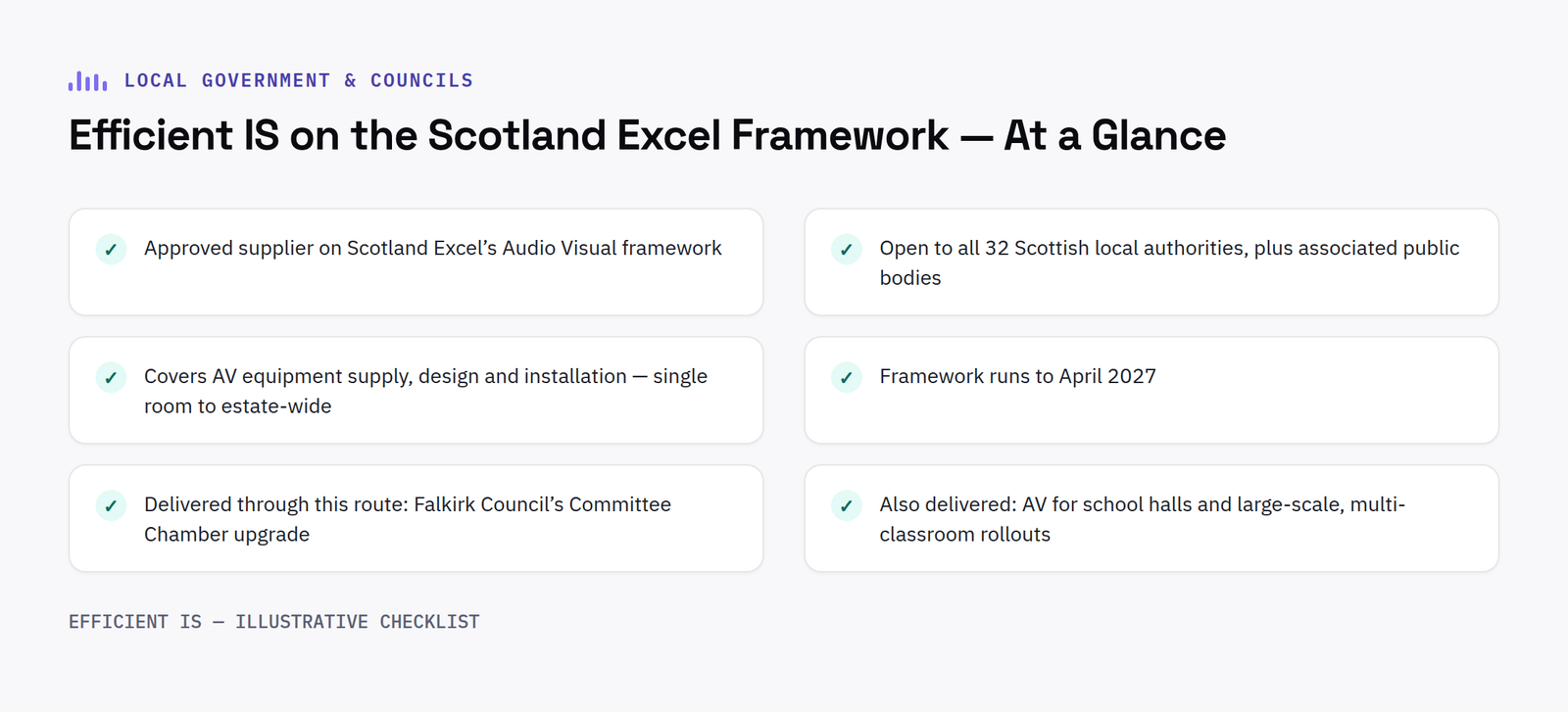
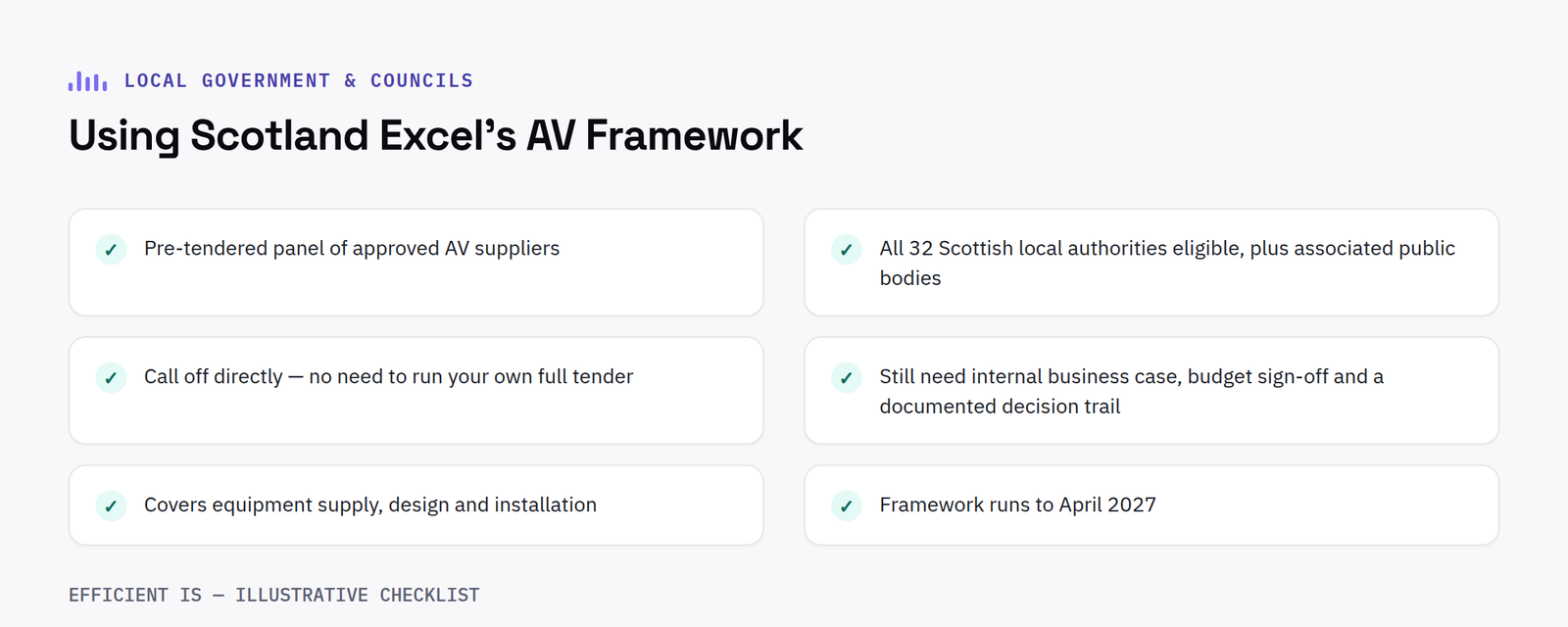
Yes, Efficient IS is a Scotland Excel approved supplier, one of a small number of suppliers approved on Scotland Excel’s Audio Visual framework, giving all 32 Scottish local authorities and associated public bodies a pre-vetted, compliant route to AV equipment supply, design and installation.
Scotland Excel is Scotland’s national centre of procurement expertise for the local government sector. Approval on its Audio Visual framework means eligible organisations can call off Efficient IS’s services through a route that already satisfies most procurement teams’ own governance requirements, rather than running a separate tender.
What that covers
The framework covers AV equipment supply, design and installation: from single-room projects to estate-wide rollouts, and runs to April 2027, giving continuity for multi-year and phased programmes.
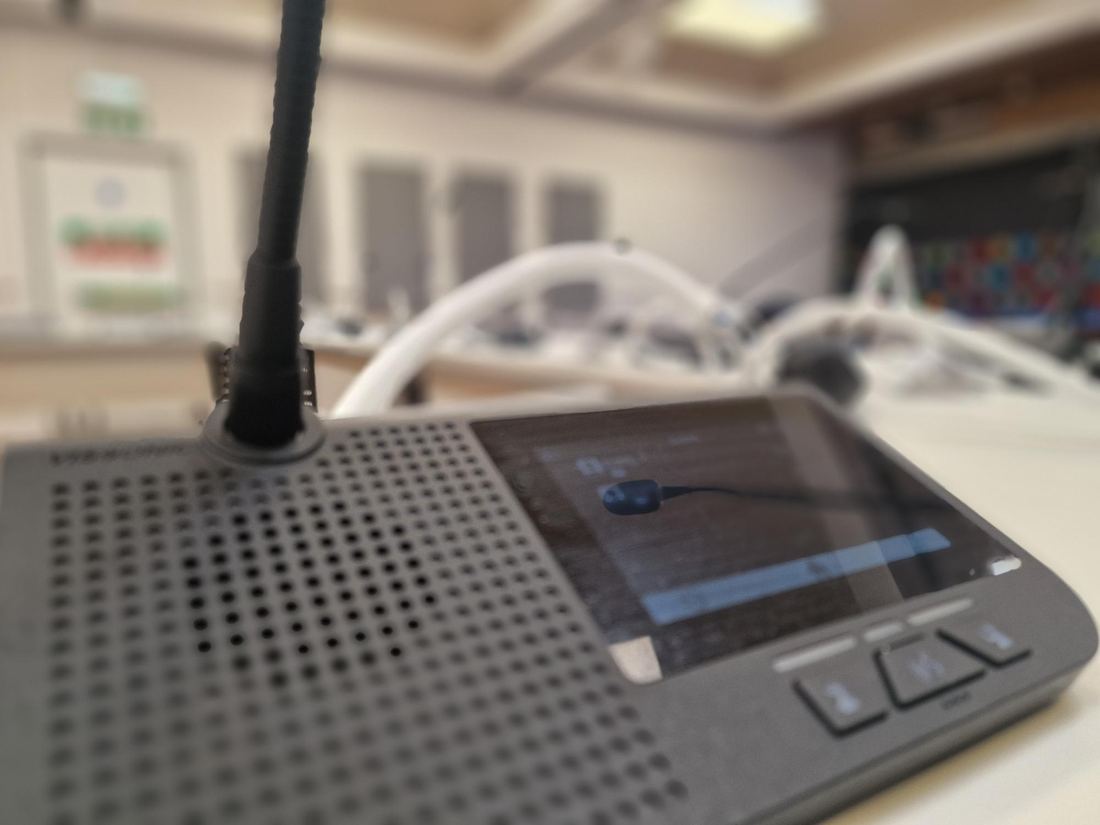
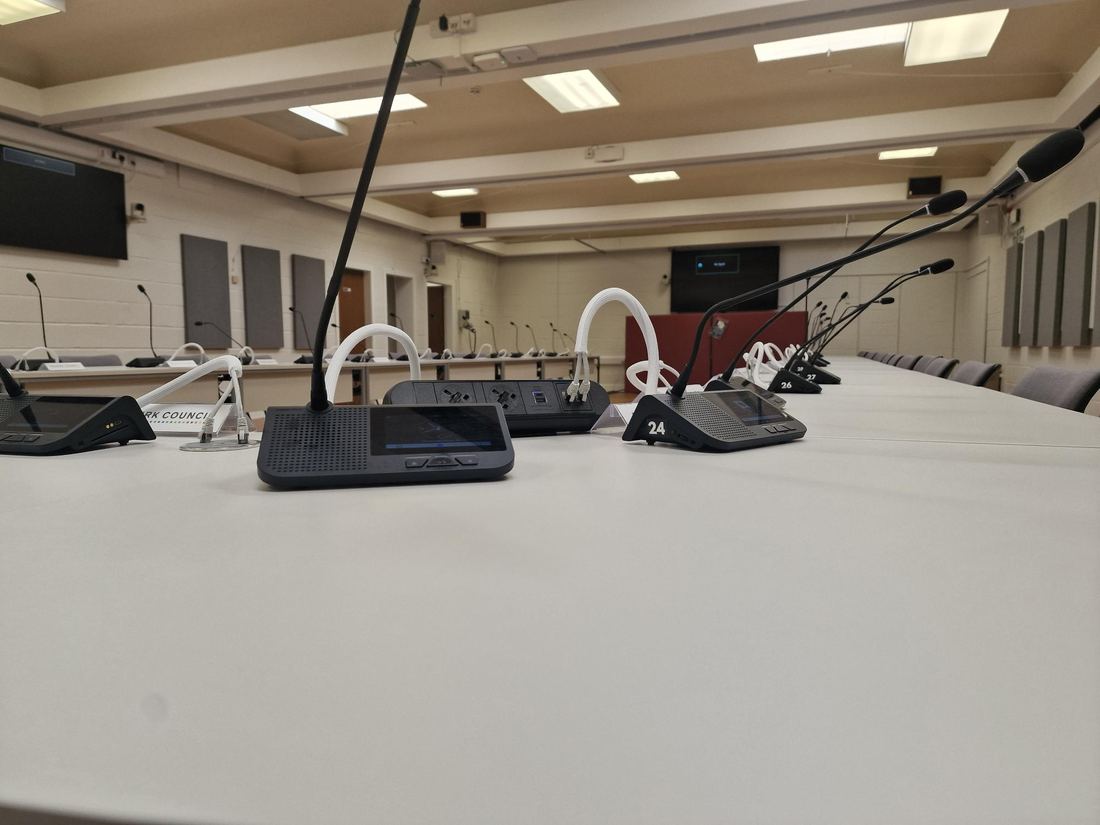
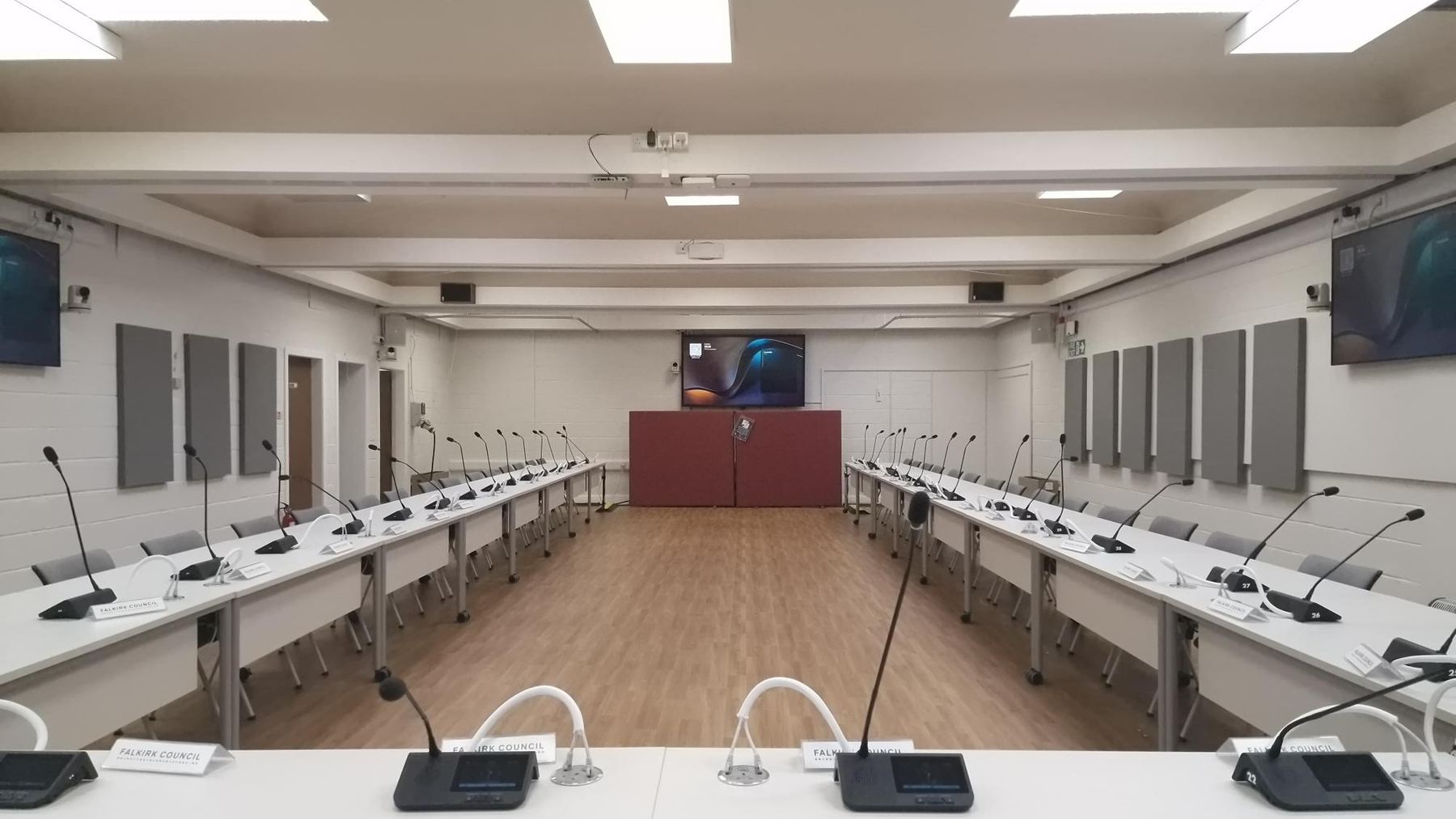
We’ve delivered through this exact route before as a Scotland Excel approved supplier: Falkirk Council’s Committee Chamber upgrade, wireless conference and electronic voting, auto-tracking cameras and live streaming, was procured through Scotland Excel and delivered on time and on budget. See the Falkirk Council case study, or the full detail on our Scotland Excel framework page and our guide to procuring AV via Scotland Excel.
FAQ
Is Efficient IS a Scotland Excel approved supplier?
Yes, Efficient IS is one of a small number of suppliers approved on Scotland Excel’s Audio Visual framework, which runs to April 2027.
Who can call off Efficient IS’s services through Scotland Excel?
All 32 Scottish local authorities, plus a range of associated public bodies and other organisations eligible to use Scotland Excel frameworks.
Does the framework cover installation as well as supply?
Yes, the framework covers AV equipment supply, design and installation, from single-room projects to estate-wide rollouts.
Has Efficient IS delivered a project through this framework before?
Yes, Falkirk Council’s Committee Chamber AV upgrade, including electronic voting and live streaming, was procured through Scotland Excel and delivered on time and on budget.
How the call-off process actually works
For an eligible organisation, working with a Scotland Excel approved supplier like Efficient IS starts with getting in touch directly rather than opening a fresh procurement exercise. The typical steps are straightforward: confirm eligibility as one of the 32 Scottish local authorities or an associated public body such as an eligible NHS board, college or university, share the project scope and any existing drawings or requirements, and receive a quote built against the framework’s already agreed rates and terms.
There is no separate competitive round for an individual project, because that competition already happened when Efficient IS was appointed to the framework in the first place. That is the whole point of using a framework this way: procurement teams still get the governance trail they need internally, a documented supplier selection and a defined scope of services, without running a full tender for every individual AV project a council or public body wants to deliver.
Projects delivered through the framework so far have ranged from single committee room upgrades to phased, multi-site rollouts across a local authority’s wider estate, covering everything from wireless conferencing and electronic voting through to full audio visual fit outs for new build council facilities. Continuity matters here too: because the framework runs to April 2027, an authority planning a phased programme, one committee room this year, a second chamber the year after, can use the same approved route and the same supplier relationship throughout, rather than re-tendering at each stage. That consistency also makes ongoing support simpler once a project is live, since the team maintaining the system is the same team that specified and installed it.
Checking a supplier for a live procurement?
Get in touch and we’ll confirm the framework details your paperwork needs.