
A room that becomes anywhere your learners or residents need it to be.
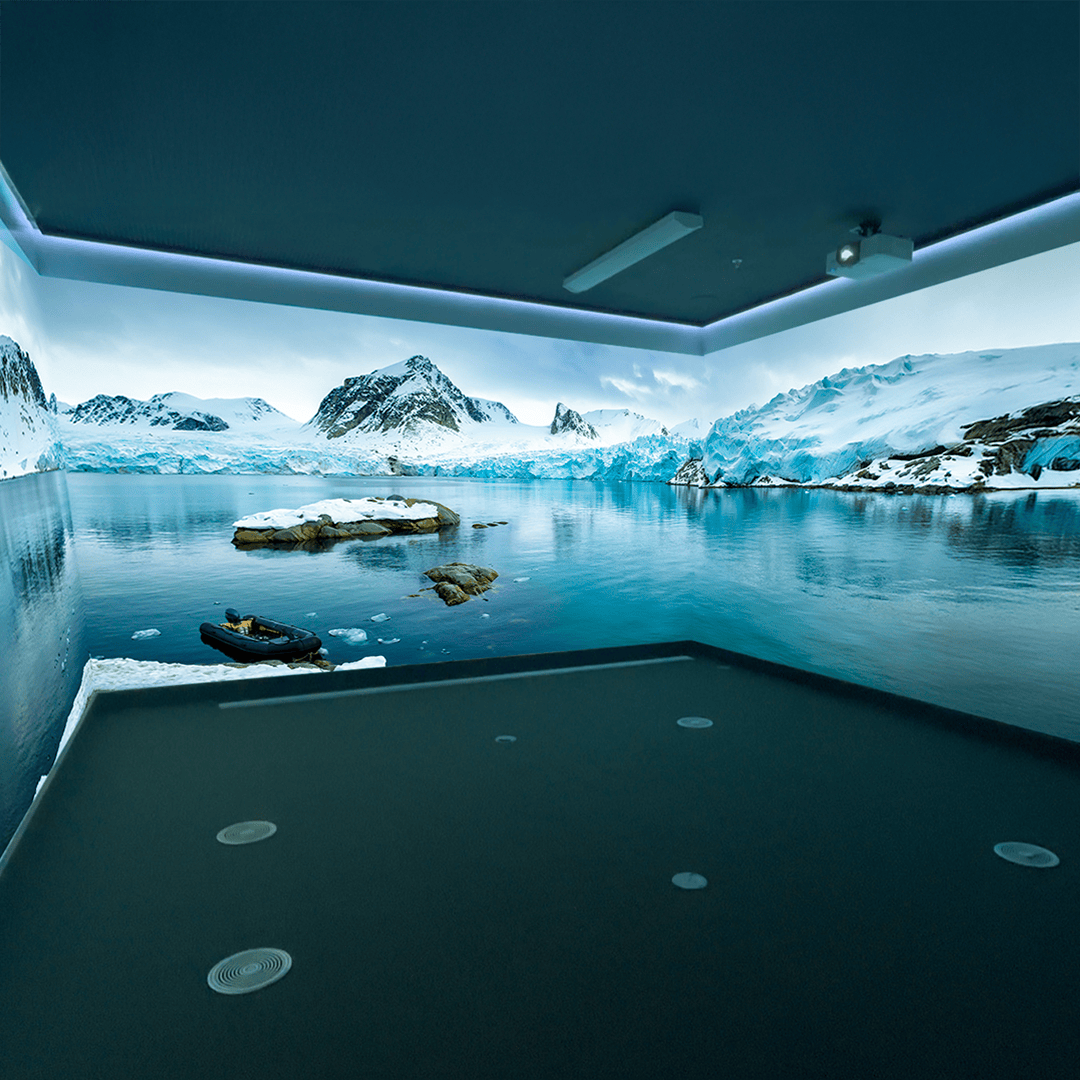
Blank walls and floor become an underwater reef, a rainforest canopy, or a calm, controlled sensory environment, at the touch of a tablet. Immersive rooms combine projection, interactive flooring and lighting into a space that’s genuinely different every session, built around the room you already have.
Built for the room, not the showroom
SEN & specialist schools
A calm, controllable multi-sensory environment for learners with additional or complex needs, content and intensity adjusted session to session, not fixed once and left.
Mainstream classrooms
Bring a topic to life instead of describing it, history, geography and science scenes that put a whole class inside the lesson rather than looking at a screen.
Care & dementia settings
Familiar, calming scenes and reminiscence content for residents, a genuinely different tool for engagement and wellbeing than a TV in the corner of a lounge.
Projection, interactive flooring and control, built as one system, not three
What separates a genuine immersive room from “a projector in a classroom” is that every element responds to the same scene at once, controlled live rather than set once and left running.
Wall & floor projection
Edge-blended, calibrated projection across one wall, multiple walls, or a full 360° room, including the floor, where interactive sensors let content genuinely respond to movement: fish that scatter as a child walks through them, leaves that ripple underfoot.
Calibration matters as much here as on a video wall, a scene that’s misaligned or colour-mismatched across surfaces breaks the illusion immediately, which is exactly what proper commissioning is for.
Lighting, sound & sensory effects
LED lighting, directional audio and, where wanted, gentle wind or scent effects layer on top of the visual scene, so the room engages more than one sense at once. Each can be dialled up, down, or off entirely per session, which is what makes this genuinely useful for sensory regulation rather than just visual spectacle.
A dementia reminiscence session and a SEN sensory-regulation session want very different intensity, the system is built to be adjusted live, by the person actually running it, not reconfigured by an engineer.
Controlled from a tablet, by the person in the room
Every scene, lighting state and effect is triggered live from an included tablet, a teacher, therapist or care practitioner switches scene mid-session to match what’s actually happening in the room, rather than being locked into a fixed running order decided in advance.
A genuinely growing space
Demand for immersive and sensory learning spaces has grown fast across SEN provision, mainstream curriculum enrichment and care settings alike, driven by a small but consistent body of practitioner evidence that multi-sensory environments improve engagement and reduce anxiety for the learners and residents who benefit most from them. It’s a space we’re actively investing in, not a one-off product line.
Where else immersive rooms are earning their place
Curriculum enrichment
A history topic delivered as a walk-through Victorian street, a science lesson set inside a cell or a coral reef, content that turns “read about it” into “stand inside it,” used across mainstream primary and secondary settings, not just specialist provision.
Reminiscence & wellbeing therapy
Familiar scenes, a seaside promenade, a wartime street, a garden in bloom, used deliberately in care and dementia settings to support recall, conversation and calm, alongside more clinical sensory-regulation content for SEN use.
Visitor & training environments
Museums, visitor attractions and specialist training providers use the same underlying technology to put an audience inside an environment they couldn’t otherwise visit, a genuinely memorable alternative to a screen on a wall.
What immersive rooms & sensory spaces costs
Indicative ranges, supplied and installed. Every project is scoped individually, this is a starting point for budgeting, not a quote.
| Configuration | Typical use | From |
|---|---|---|
| Single-wall projection room | Small room or corner, one wall | From £8,500 +VAT |
| Full-room 360° immersive space | Multi-wall projection, interactive flooring | From £22,000 +VAT |
| Sensory room package | SEN/specialist provision, includes lighting & effects | From £15,000 +VAT |
| Content library & tablet control add-on | Any room size | Quoted with system |
Public sector and education purchase orders accepted.
Prefer to talk it through? Call 0845 095 3600 or email av@efficient-is.co.uk: we’ll give you a straight answer, not a sales script.
Design, supply, install, support, one team throughout
Design
Site survey and requirements gathering, technology recommendation and budget options.
Supply
Procured through our manufacturer and distributor relationships, or your framework of choice.
Install & commission
Delivered by our engineers in Scotland, or a vetted local partner, anywhere in the UK, every system tested and calibrated before we call it done.
Handover, training & support
Formal handover and documentation, hands-on training for your team, and optional ongoing care plans.
Answered plainly
What actually is an immersive room?
A room, or part of one, where projection, interactive flooring and lighting turn blank walls and floor into a fully surrounding scene, controlled from a tablet. It’s not a single screen or a projector in a normal classroom; the room itself becomes the content, and it changes scene to scene, lesson to lesson.
Is this only for schools?
Schools and SEN/specialist provision are where this technology is most established, but the same approach works well in care settings for reminiscence and sensory engagement, and in training or visitor-facing spaces where a genuinely memorable, hands-on environment matters more than a standard screen would.
Do we need a dedicated room, or can it go in an existing space?
Both work. A dedicated room gives the most complete result, full wall and floor coverage, but a well-specified single-wall or corner installation in an existing classroom or quiet room is a genuinely effective, lower-cost starting point.
Who creates the content, and can we adjust it?
Content comes from an extensive, regularly updated scenario library, and is controlled live from an included tablet, so a teacher or practitioner can match what’s on the walls to the actual lesson or session, not just pick from a fixed playlist.
What optional extras are worth considering?
LED lighting, gentle wind effects and scent are the most common additions, each genuinely changes how immersive the space feels, and each can be added later rather than needing to be specified from day one.
Have a project in mind?
Tell us the room and the outcome you need, we’ll tell you what’s realistic.












Find our work useful? Add us as a preferred source on Google.