Delegate Conference & Microphone Systems Explained: Council Chambers and Boardrooms
What looks like a simple gooseneck microphone at each seat is usually the visible end of a networked system doing a lot more underneath, from speaking queues and camera tracking to, increasingly, the vote itself.
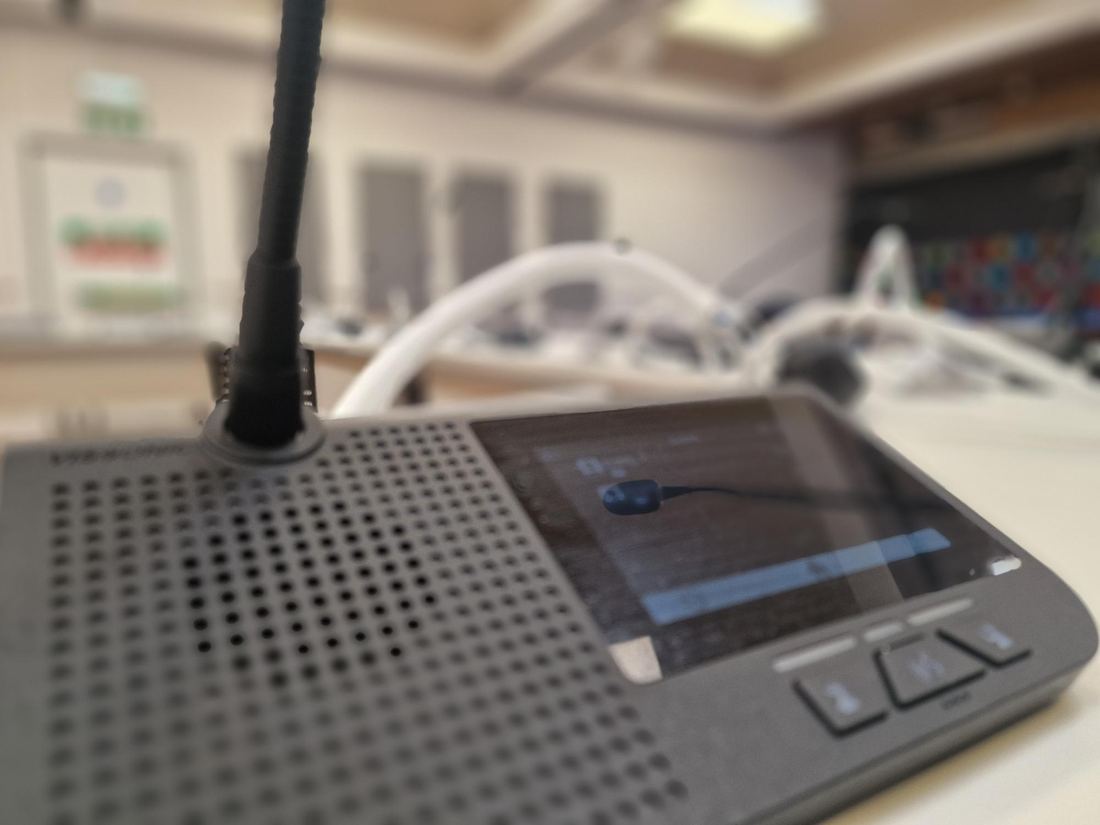
A delegate conference system is the network of individual microphone and control units, one per seat, that lets a chamber or boardroom manage who’s speaking, who’s requesting to speak, and increasingly who’s voting, all from one central point rather than a single shared microphone being passed around or left permanently live.
It’s a specific, well-established category of AV equipment, not a generic “microphone system,” and the distinction matters when it comes to specifying one: what looks like a simple gooseneck microphone at each seat is usually the visible end of a networked system doing a lot more underneath.
What a delegate unit actually does
Each position, whether a simple push-to-talk microphone or a full touchscreen discussion unit, is individually addressable on the network. That’s what allows a chairperson or an operator to control who’s live at any moment, set a limit on how many microphones can be open simultaneously to avoid a chamber talking over itself, and manage a speaking queue where delegates request the floor and are brought in in order. On a touchscreen unit, the same position can also carry electronic voting, agenda display and delegate identification, functions a basic microphone-only unit can’t support.
This is also what makes speaker-tracking cameras work automatically. A PTZ camera with auto-tracking isn’t guessing who’s talking from audio alone, it’s typically triggered by which delegate unit on the network has gone live, so the shot cuts to the correct person the moment they’re recognised as speaking, without an operator manually steering a camera.
Wired versus wireless: what actually decides it
Wireless conference systems have closed most of the reliability gap with wired installations, and remove the cabling cost and disruption of running a line to every seat, a real factor in a room like a council chamber that can’t be out of service for long. The trade-off is around interference management in a room with a lot of other wireless equipment already in use, and battery/charging logistics for units that see daily use. Wired systems remove that variable entirely at the cost of a cable to every position, which matters more in a new-build or a full refurbishment where containment is already being run than in a room being upgraded around a live meeting schedule.
In practice the deciding factor is usually less about signal reliability, modern systems handle that well either way, and more about installation constraints: whether the room can accommodate cable runs to every seat without disruptive works, and how often the seating plan itself changes.
How this connects to the rest of the room
A delegate system rarely sits on its own. The audio it captures typically routes through a DSP for acoustic echo cancellation before it reaches a hybrid meeting platform like Microsoft Teams or a public livestream, without that step, remote attendees get a noticeably worse experience than anyone in the room. The same network that manages speaking order is often what triggers camera tracking, and on touchscreen units, the same position that handles the microphone can carry voting. Specifying “a microphone system” in isolation, without accounting for how it needs to integrate with cameras, DSP and any voting or streaming requirement, is one of the more common gaps in an AV brief for this kind of room. Our guide to electronic voting systems for council chambers covers how that particular integration works in more detail.
Efficient IS specifies and installs Vissonic and other delegate conference systems for council chambers, courtrooms and boardrooms: see our Falkirk Council case study for a full chamber installation, or our Meeting Room & Boardroom AV and Council Chamber & Broadcast pages for the services behind it.
FAQ
What’s the difference between a delegate microphone and a discussion unit?
A delegate microphone is typically push-to-talk with limited or no display. A discussion unit adds a touchscreen to the same networked position, which can carry electronic voting, agenda information and delegate identification alongside the microphone function.
Does a delegate conference system need to be wireless?
No, wired and wireless both work reliably in current systems. The deciding factor is usually installation constraints (whether cable runs to every seat are practical) and how often the room’s layout changes, rather than a meaningful difference in reliability.
How does a delegate system trigger automatic camera tracking?
Auto-tracking PTZ cameras are typically triggered by which delegate unit has gone live on the network, rather than by analysing audio directly, the camera cuts to whoever the system recognises as currently speaking.
Have a room in mind?
Tell us the room and we’ll tell you what’s realistic, delegate microphones, cameras, voting, or all three.