
Video walls that hold up under 24/7 use, not just on launch day.
From a 2×2 reception display to a full control-room LED wall, we design for the viewing distance, ambient light and duty cycle of the room it’s actually going in, then stand behind it with support after handover.
Built for the room, not the showroom
Control & command rooms
Police, fire and local authority operations centres, legible from across the room, running continuously.
Reception & public realm
Corporate lobbies, civic buildings and museums, brand and wayfinding content at scale.
Retail & hospitality
Menu boards, promotional walls and immersive backdrops for restaurants, bars and venues.
LCD or direct-view LED, and why pixel pitch and the video processor matter just as much as the panels
The panels get all the attention in a sales conversation. In practice, the viewing distance, the pixel pitch and the box driving the whole wall decide whether it looks right in six months, not just on install day.
LCD (tiled)
Individual commercial displays butted together in a grid, with bezels as narrow as 0.5 to 1.2mm between panels. The lowest cost per m² at broadcast-grade image quality, the fastest to source, and the simplest to service, a failed panel is one unit, swapped out without touching the rest of the wall.
Best suited to viewing distances of roughly 1.5 to 4m: receptions, meeting rooms, most control rooms and retail. The bezel lines are visible up close, which is the main trade-off against LED. This is the LCD side of a typical video wall installation, the more budget-friendly starting point for most reception and control room projects.
Direct-view LED
Individual LEDs mounted on cabinets or tiles that butt together with no visible seam, the image reads as one continuous surface rather than a grid of screens. Scales to almost any shape or size, indoors or outdoors, and can run at far higher brightness for daylight or facade use.
Costs more per m² than LCD and needs more careful structural and power planning, so it earns its keep at longer viewing distances, larger formats, or wherever a seamless image matters more than up-front cost. On a direct-view LED video wall installation, that extra planning up front is what keeps the finished wall looking sharp for years, not just on launch day.
Pixel pitch, in plain terms
Pixel pitch is the distance between the centres of neighbouring LED clusters, in millimetres, a 2.5mm pitch has pixels roughly 2.5mm apart. The smaller the number, the sharper the image and the closer your audience can stand before individual pixels become visible rather than blending into a smooth picture.
As a rule of thumb, minimum comfortable viewing distance in metres is roughly the pixel pitch in millimetres. A 2.5mm wall wants viewers at 2.5m or further back; a fine 1.2mm pitch suits close-up control-room desks; a coarser 6 to 10mm pitch is fine, and considerably cheaper, for a building facade viewed from the street.
The video processor is doing more work than the panels
Whatever’s driving the wall, a dedicated video wall processor, not just a graphics card, is what actually decides whether content looks intentional: aligning bezels and LED tiles into one canvas, scaling multiple sources across it, and keeping everything in sync so a moving image doesn’t tear or drift out of alignment between panels.
It’s also what makes a wall useful day to day rather than just decorative, layouts you can recall at the press of a button, inputs you can route without a laptop under someone’s desk, and redundancy so one failed input doesn’t blank the whole wall. We spec the processor to the use case, not just the panels.
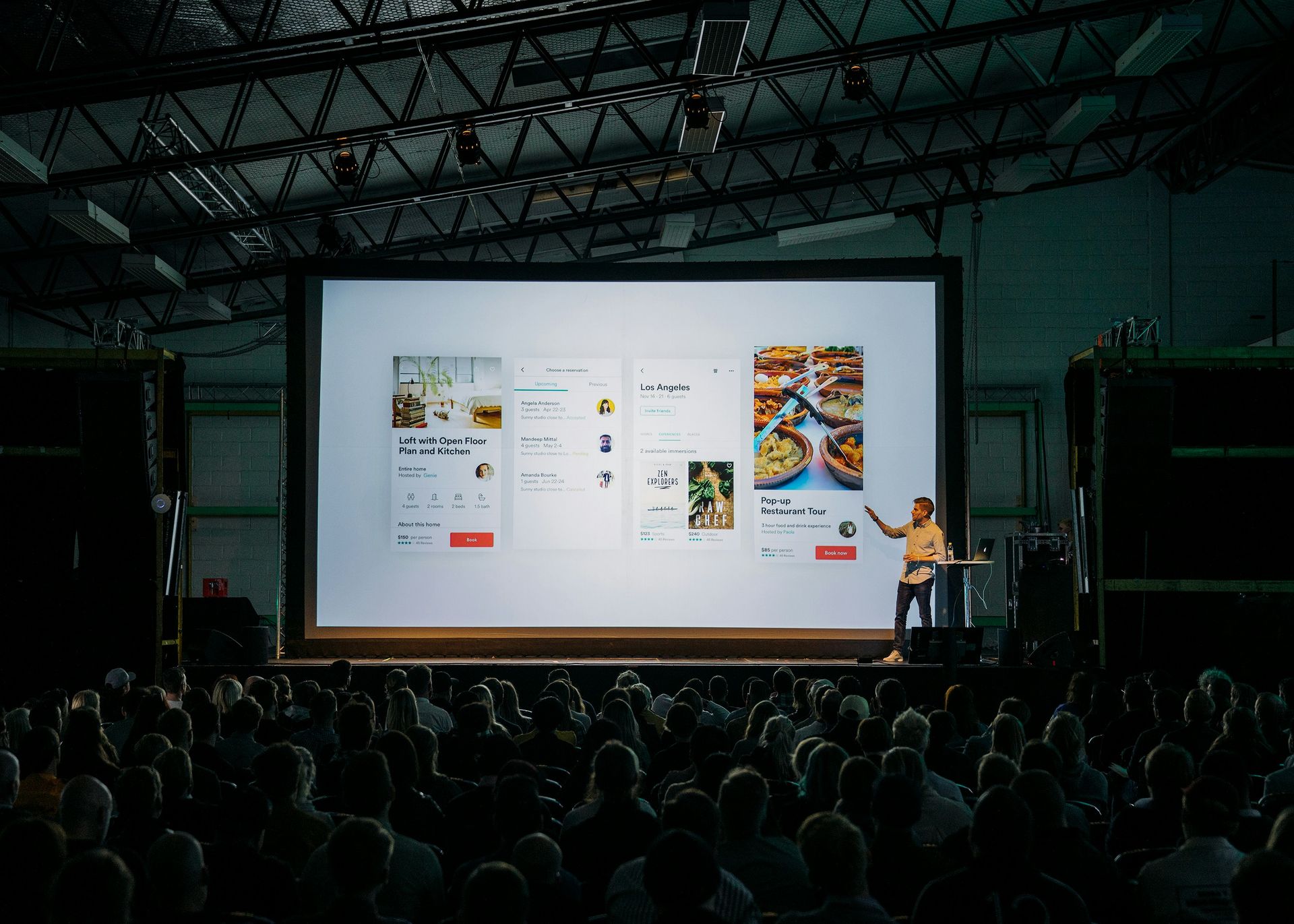
What a video wall actually changes
Beyond “it looks impressive”, the practical reasons a video wall earns its budget.
Engagement
A large-format wall stops people in reception, on a retail floor or at an event stand in a way a single screen doesn’t, and holds attention long enough for the message to land, whether that’s brand storytelling, live data or wayfinding.
Innovation & brand
Control rooms, council chambers and command centres run on video walls because the operational picture genuinely needs that much canvas, and the wall itself signals a level of investment and capability to every visitor who walks past it.
Cost & environmental efficiency
One content platform driving a wall replaces the print-and-reprint cycle of static signage and posters, no wasted stock when a message changes. Modern LED and commercial LCD panels are also considerably more power-efficient per m² of bright, legible surface than the previous generation of displays they typically replace.
What a video wall costs
Indicative ranges, supplied and installed. Every project is scoped individually, this is a starting point for budgeting, not a quote.
| Configuration | Typical use | From |
|---|---|---|
| 2×2 LCD video wall (55″) | Reception, meeting room | £6,000 +VAT |
| 3×3 LCD video wall (55″) | Control room, large reception | £12,500 +VAT |
| Direct-view LED, indoor (per m²) | Command centre, brand wall | £2,100 +VAT |
| Direct-view LED, outdoor (per m²) | Building facade, forecourt | £2,100 +VAT |
| Video wall controller & mounts only | Adding to an existing wall | £165 +VAT |
Public sector and education purchase orders accepted. Prefer to browse ready-configured kits? See the shop.
Prefer to talk it through? Call 0845 095 4200 or email av@efficient-is.co.uk: we’ll give you a straight answer, not a sales script.
Design, supply, install, support, one team throughout
Design
Site survey, viewing distance and ambient light assessment, technology recommendation.
Supply
Procured through our manufacturer and distributor relationships, or your framework of choice.
Support
Optional care plans with proactive checks and rapid-response call-outs.
A synced video wall, built to run itself
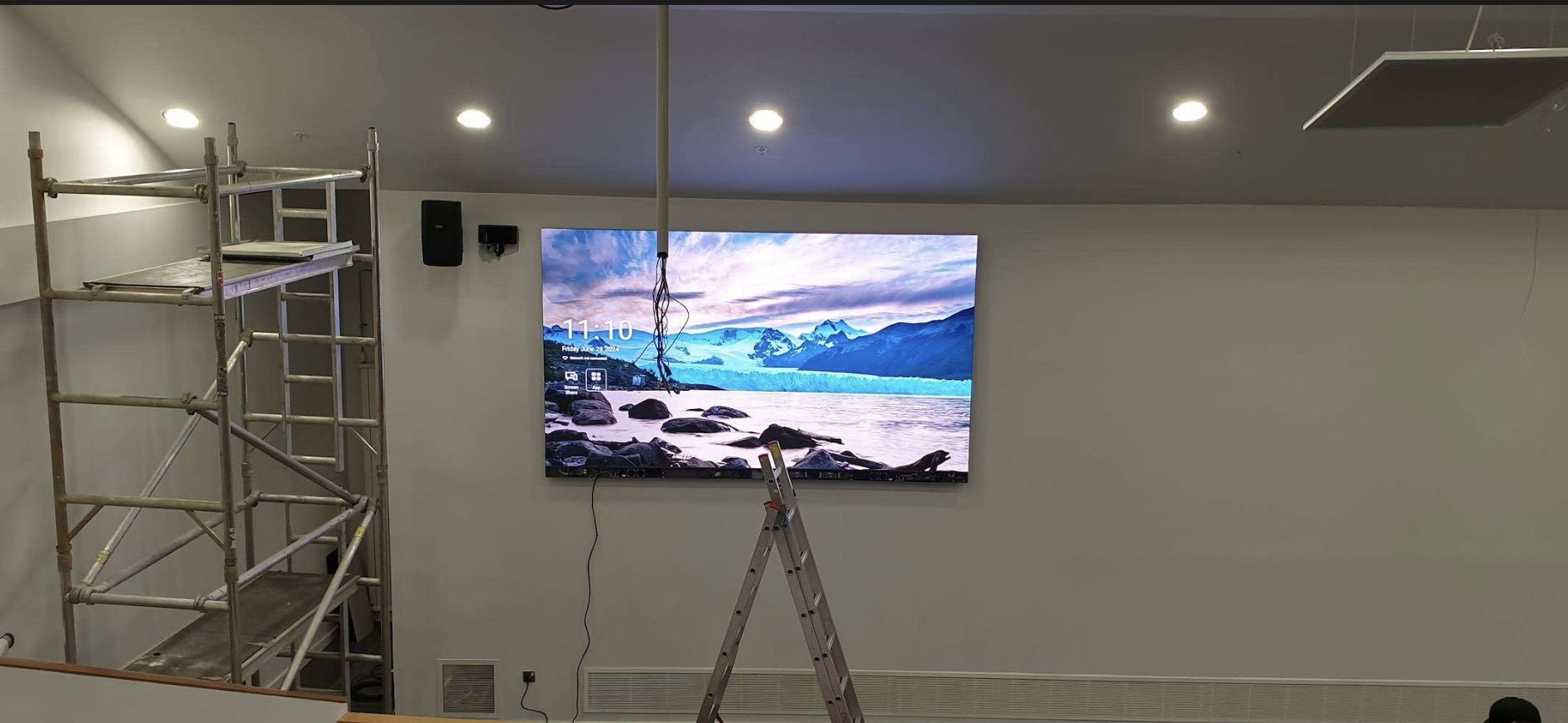
Scottish Fire and Rescue Service: A Voice-Tracking Auditorium at Cambuslang
A synced video wall for an SFRS auditorium that hosts graduation ceremonies, training and major briefings, paired with cameras that automatically find whoever is speaking and a ceiling microphone array that follows them too, streamed live to Microsoft Teams.
Read the case studyMultiple LED panels built and calibrated as one synchronised image, with the camera tracking, microphone automixing and streaming all programmed to work together, so the room adapts to graduation ceremony, training session or briefing without an operator reconfiguring anything between events.
Three ways to move forward
Whichever way suits you best, talk it through, get a ballpark figure instantly, or go straight to the shop if you already know what you need.
Call or email the office
Tell us what you're trying to do and we'll scope it properly, usually the fastest route for anything non-standard.
Get in touchInstant ballpark pricing
A quick guide price in a couple of clicks, no obligation, and no call needed to get a starting figure.
Get an instant estimateReady to order
Know exactly what you need? Browse and order directly, public sector and education purchase orders accepted.
Shop nowVideo Wall Installation: Answered Plainly
How much does a video wall cost in Scotland?
A small LCD video wall (four to six 55″ screens) typically starts from around £6,000 to £12,000 supplied and installed. Large-format direct-view LED walls for control rooms or receptions usually start from £15,000 and scale with size, pixel pitch and content software.
LCD or direct-view LED, which is right for me?
LCD suits most reception, corporate and control-room budgets at viewing distances under 3 to 4m. Direct-view LED gives a seamless, bezel-free image and works better at longer distances and larger sizes, at a higher cost per m².
How long does installation take?
A standard 2×2 or 3×3 LCD wall is typically installed and commissioned in 1 to 2 days once mounting, power and data are in place. Larger LED installations are scoped individually.
Have a video wall in mind?
Tell us the room and we’ll tell you what’s realistic.









Find our work useful? Add us as a preferred source on Google.