
Immersive Rooms in UK Universities: From Research Lab to Lecture Theatre
A growing number of UK universities now have a dedicated immersive or CAVE style room, used for everything from engineering visualisation to medical training, and the reasons they are investing are more practical than experimental.
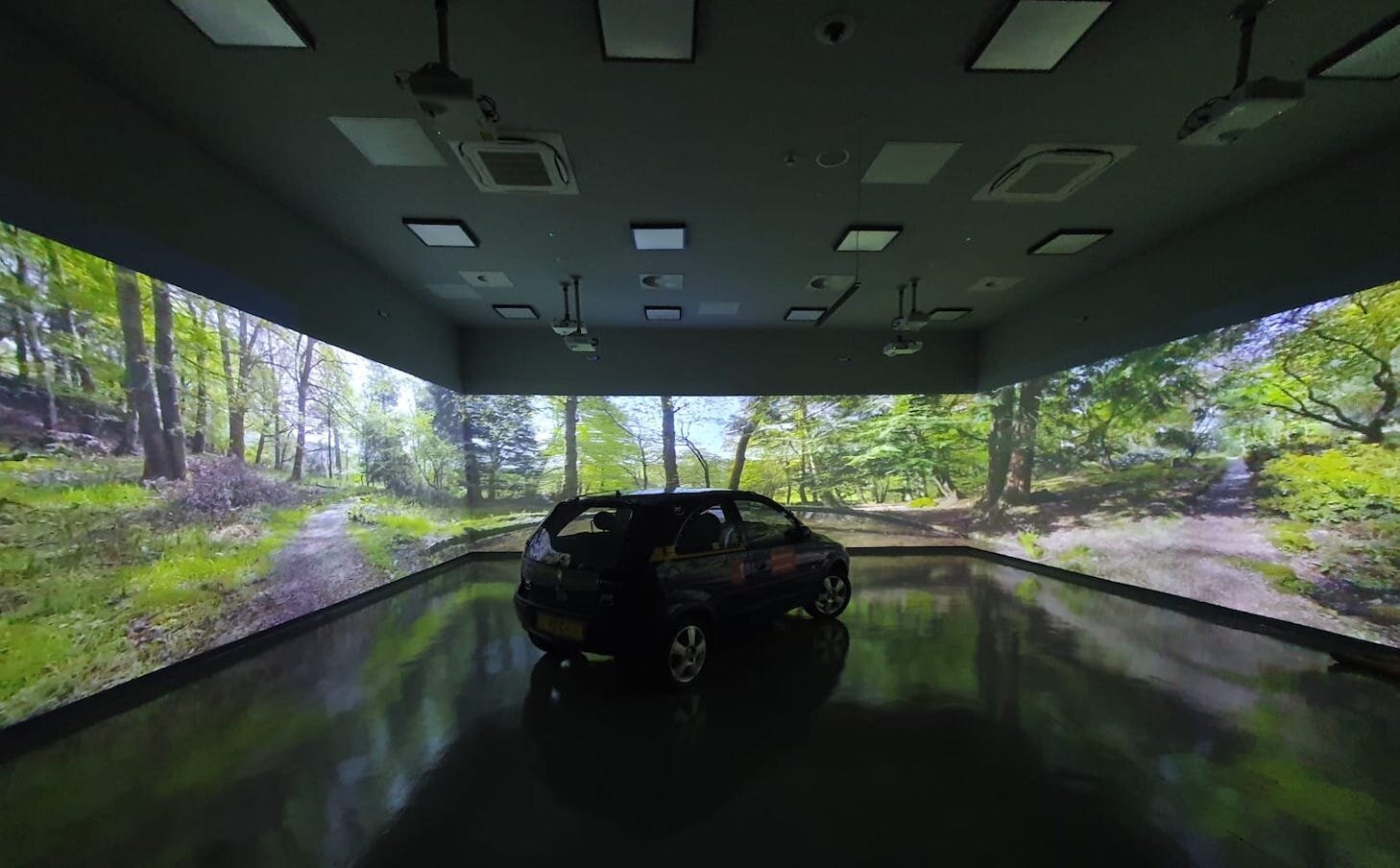
An immersive room at university level usually means one of two things: a CAVE, short for Cave Automatic Virtual Environment, which surrounds users with projected or displayed visuals on multiple walls for shared, room scale visualisation, or a more general immersive teaching space built around large scale projection for a specific subject area. Both are now real, working facilities across UK higher education, not pilot projects.
Research visualisation
Oxford Brookes University opened what was reported as the UK’s first multi view stereoscopic VR CAVE in 2022, installed with specialist integrator ST Engineering Antycip and used in architecture and design teaching. UCL runs an Immersive Displays Lab as part of its virtual environments and computer graphics research. The University of Plymouth lists a dedicated Immersive Visualisation Suite among its campus facilities. These are genuinely different use cases from each other, spanning design teaching, pure research, and shared visualisation, which is worth knowing before assuming one university’s setup is a template for another.
Teaching and skills training
Queen Mary University of London runs an Immersive Learning Lab inside its Faculty of Medicine and Dentistry, and the University of Nottingham has opened what it describes as a world leading virtual reality teaching facility. Coventry University added new immersive technology suites in 2024 alongside an Office for Students funded CAVE and Powerwall project tied to its National Transport Design Centre, and UWE Bristol runs a VR CAVE used for engineering and simulation teaching. The pattern across these is consistent: immersive rooms earning their place by making genuinely hard to visualise things, a human body system, a vehicle design, a complex structure, something students and researchers can walk into rather than just look at on a flat screen.
Where the funding is coming from
This is not simply individual departments spending discretionary budget. Loughborough University opened a five point eight million pound DigiLabs facility in 2025, funded through the Office for Students’ capital funding programme, specifically for STEM teaching. Coventry’s CAVE and Powerwall project was also funded through the Office for Students. That is a meaningful signal for any university weighing up whether to bid for similar capital funding themselves, since there is now a track record of this specific category of facility being judged fundable at a national level, not just a departmental nice to have.
What estates and IT teams need to plan for
An immersive or CAVE room is as much a network and estates project as it is an AV one. Multiple projectors or displays need to stay synchronised, which means a reliable, high bandwidth network backbone rather than a standard classroom data point. The room itself usually needs structural and acoustic consideration beyond a normal teaching space, particularly where tracking sensors or stereoscopic viewing are involved. Procurement should also stay brand agnostic where possible: several UK installations use different combinations of suppliers such as Igloo Vision for the room structure, Barco or Christie for projection, and ST Engineering Antycip for VR integration, and the right combination genuinely depends on the specific teaching or research use case rather than one default setup.
See our Immersive Rooms and Sensory Spaces page, or our guide to what an immersive room actually is for the underlying technology.
FAQ
What is the difference between a CAVE and a general immersive teaching room?
A CAVE, short for Cave Automatic Virtual Environment, is specifically built for shared, room scale visualisation across multiple walls, commonly used in design and engineering research. A general immersive teaching room uses large scale projection for a specific subject area, such as medical or transport design training, and does not always need the full multi wall CAVE setup.
Is funding actually available for this kind of facility, or does it have to come from department budgets?
Real funding precedents exist. Loughborough University’s five point eight million pound DigiLabs facility and Coventry University’s CAVE and Powerwall project were both backed by Office for Students capital funding, which is useful evidence if your own institution is considering a funding bid.
What is an immersive room actually used for day to day at a university?
It varies by institution. Examples include architecture and design visualisation at Oxford Brookes, medical and dental teaching at Queen Mary, and transport design research at Coventry. The common thread is making something genuinely hard to picture on a flat screen into something students or researchers can walk around and study directly.
Does an immersive room need a completely different network setup from a normal teaching space?
Usually yes. Multiple projectors or displays need to stay synchronised in real time, which calls for a reliable, high bandwidth network backbone rather than a standard classroom data point, so it is worth involving your network team early rather than treating it purely as an AV purchase.
Have a campus project in mind?
Tell us what you’re trying to fix and we’ll tell you honestly what’s realistic.