A gym sound system needs separate zones so a studio class doesn’t drown out reception, a priority mute from the fire alarm, a music licence and a noise assessment. Settle those before you pick speakers, because they decide where the speakers go and who is responsible for what.
How to zone a gym sound system
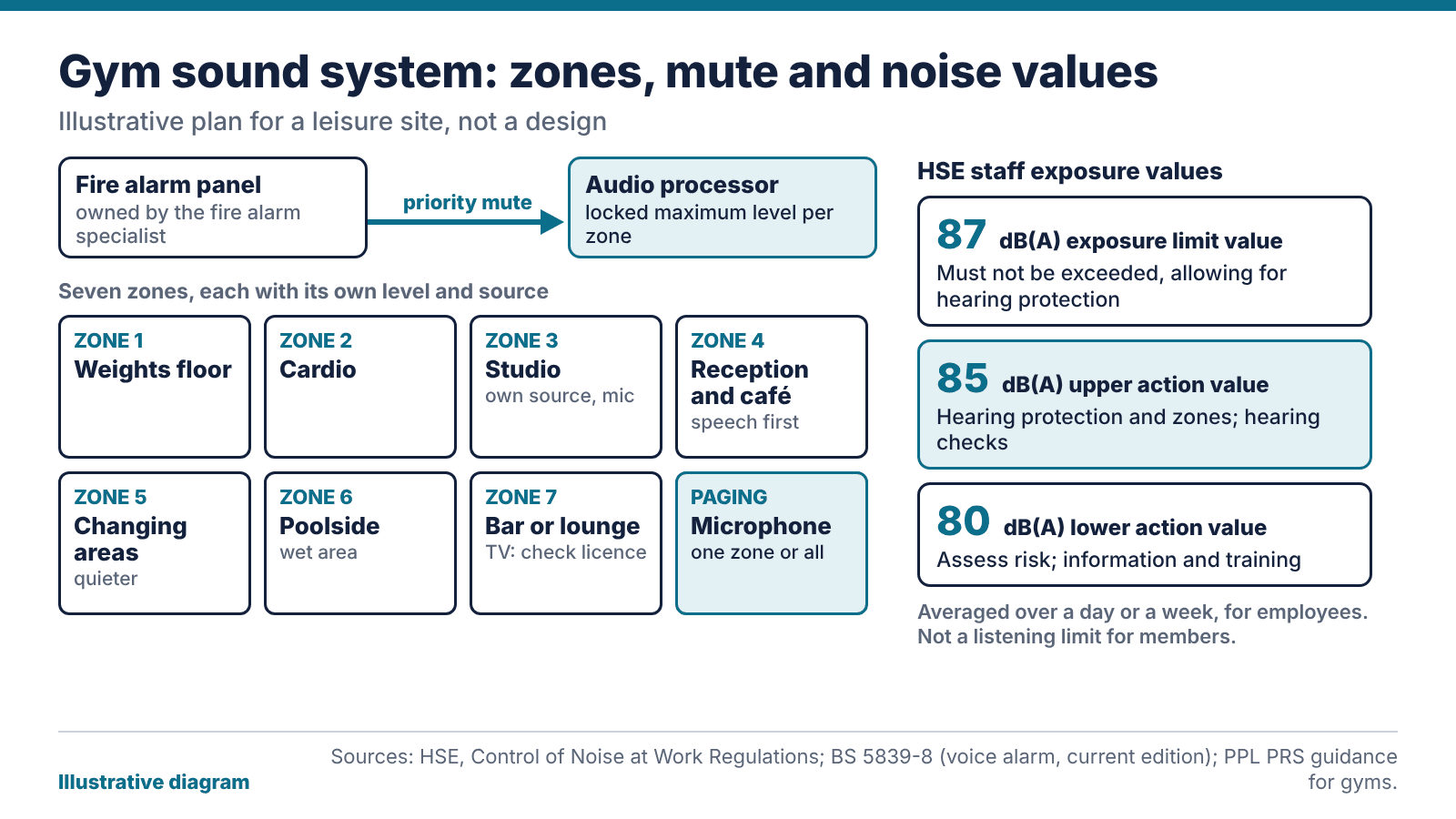
A gym is several rooms with different jobs, and one sound level won’t suit them. The weights floor wants energy. A studio class wants its own source and a microphone for the instructor. Reception and the café want music low enough to talk over, and changing areas want it quieter still.
So we plan a gym sound system in zones, each with its own level and source and a maximum volume. Set the maximum in the processor and lock it, with a simple wall control or app for staff to move within the limit. Staff can turn the weights floor up and nobody can push reception into the red.
Keep studios separate. A class with its own source and instructor microphone avoids the common complaint of music bleeding into the next room. If it still bleeds, look at the wall build before you blame the speakers. A thin partition leaks whatever you do with the gain.
Wet areas are harder. Hard surfaces and a large hall volume make speech difficult to follow, and the equipment needs suitable protection. Our sport and leisure sector page covers poolside installs.
Announcements need their own route. A paging microphone at reception that can reach one zone or all of them lets staff deal with a lost child or a closing time without shouting.
Fire alarm priority mute and BS 5839-8
When the fire alarm sounds, the gym sound system has to go quiet. The usual method is a signal from the fire alarm system that mutes the background audio, so the alarm can be heard and understood.
BS 5839-8 is the code of practice for the design, installation, commissioning and maintenance of voice alarm systems. The voice alarm belongs to a fire alarm specialist and we leave it alone. Check which edition of the standard your specialist works to, as editions change.
We agree the link with them early. Settle which signal mutes the music, which zones get a spoken message and whether the music stays muted until the panel is reset. Ask how the link is monitored, so a cut cable doesn’t leave a gym playing music through an evacuation. Then agree who tests it after any change to the audio system.
Put the test in the maintenance schedule. A mute that worked at handover and hasn’t been tested since is an assumption.
Our atrium and reception AV page covers the front-of-house side, where announcements and signage meet.
Music licences for a gym sound system
Playing music to the public needs permission from the copyright owners. PPL PRS says in its guidance for gyms and fitness studios that TheMusicLicence usually applies to music on the gym floor, in the café or at reception, and to music in exercise and dance classes. We won’t quote prices, since they depend on your venue and PPL PRS sets them.
The licence belongs to the operator, not the installer, so make it someone’s job. Gaps to look for are classes run by independent instructors, a bar or café with a TV showing sport, and staff who connect their own phone to the system. Music in broadcasts on a public TV usually falls under the same licensing, and live TV has its own separate requirements, so check both.
Check the terms of any streaming service before you run it into a public space, because many consumer accounts are written for private use. A business music service with suitable terms is easier to defend.
We install the system. Whether the licence covers what you play is your decision and your responsibility.
Noise limits for a gym sound system: what the HSE values cover
The HSE’s Control of Noise at Work Regulations set three levels. The HSE regulations page gives them as 80 dB(A) lower exposure action value, 85 dB(A) upper exposure action value and 87 dB(A) exposure limit value.
They are staff exposure values for employers, averaged over a day or a week, and they apply to the people who work in the building, such as instructors and lifeguards. Members aren’t covered by them. At 80 dB(A) the employer must assess risk and provide information and training. At 85 dB(A) it must provide hearing protection and hearing protection zones, and health surveillance for workers regularly exposed above that. The 87 dB(A) limit takes account of any hearing protection, and workers mustn’t be exposed above it.
An instructor who teaches several loud classes a day will have the highest exposure. Ask a competent person to assess it, and design with the result: lower the studio maximum, give the instructor a headset microphone so they don’t shout over the music, and rotate the heaviest classes. Our view: set the studio maximum in the processor from that assessment and lock it.
Your premises licence or planning conditions may also set limits at the boundary, so read those too.
Martyn’s Law and your gym sound system
The Terrorism (Protection of Premises) Act 2025 isn’t in force yet. The SIA says it’s expected to come into force in spring 2027, with the exact date to be confirmed. The standard tier covers venues where 200 to 799 people can be present, including staff, and the enhanced tier 800 or more.
Gyms and swimming pools aren’t named in the Act. Schedule 1 covers uses such as entertainment, leisure or recreation activities, so whether your premises qualify depends on whether your use falls within a listed category and on your capacity. Take advice. Our posts on when the law comes into force and who it applies to go through the detail.
For a sound system, the useful point is communication. Work out now who would speak if you ever had to tell people to leave or stay put, to which zones and from where. Then build the route: a priority paging microphone, zones that can be addressed together and a script. The SIA says that neither it nor the Home Office can endorse specific companies or services for compliance, so we never call a speaker or a screen “Martyn’s Law compliant”. Nobody could back that claim.
A short spec to give your gym sound system supplier
Put this in your brief and the quotes will compare like for like. It also stops the cheapest quote winning by leaving things out.
- A zone list: weights, cardio, studios, reception, café, changing areas and pool, with a maximum level for each.
- A locked maximum level in the processor, with a simple staff control.
- A fire alarm interface agreed in writing with your fire alarm specialist, and a test date.
- A paging microphone that can address single zones and all zones.
- Instructor headset microphones for classes, so nobody has to shout over the music.
- A named owner for the music licence, and a note on what is played where.
- A named person to commission a noise assessment, and a date for the first one.
- A support route that says who answers the call when the music cuts out.
For leisure sites with outdoor screens, our Lanark Memorial Centre case study shows the display side.
The bottom line: before you choose a speaker, get four things in writing: the zones and their maximum levels, the fire alarm interface, who holds the music licence and who commissions the noise assessment.
FAQ
What is a zoned gym sound system?
It splits the building into areas such as weights, studios and reception, each with its own level and source, plus a maximum volume. Staff can adjust within limits, and announcements can reach one zone or all of them.
Does a gym need a music licence?
PPL PRS says TheMusicLicence usually applies to background music and music in classes at gyms. Independent instructors and TVs in the café or bar can also trigger it. Check your own position with PPL PRS.
How loud can a gym sound system play music?
The HSE’s 80, 85 and 87 dB(A) values are staff exposure values, not a limit for members. Your premises licence or planning conditions may set boundary limits as well. Ask a competent person to assess the noise.
Should the gym music mute when the fire alarm goes off?
We recommend a priority mute from the fire alarm system, agreed with the fire alarm specialist who owns the voice alarm. BS 5839-8 covers voice alarm systems, so check the current edition. Test the link after any audio change.
Will Martyn’s Law apply to my gym?
Not yet, as the Act isn’t in force, and the SIA expects spring 2027. Gyms aren’t named in the Act, so it depends on whether your use falls within a listed category and on capacity, including staff. Take advice.
Can a supplier sell a Martyn’s Law compliant sound system?
No. The SIA says it and the Home Office can’t endorse specific companies or services for compliance. A sound system can support your announcement plan, but compliance depends on your procedures.