
What is an immersive room, actually?
“Immersive room” gets used loosely, so here’s what it actually means in practice: how the technology works, what’s genuinely worth including, and what tends to be an unnecessary add-on.
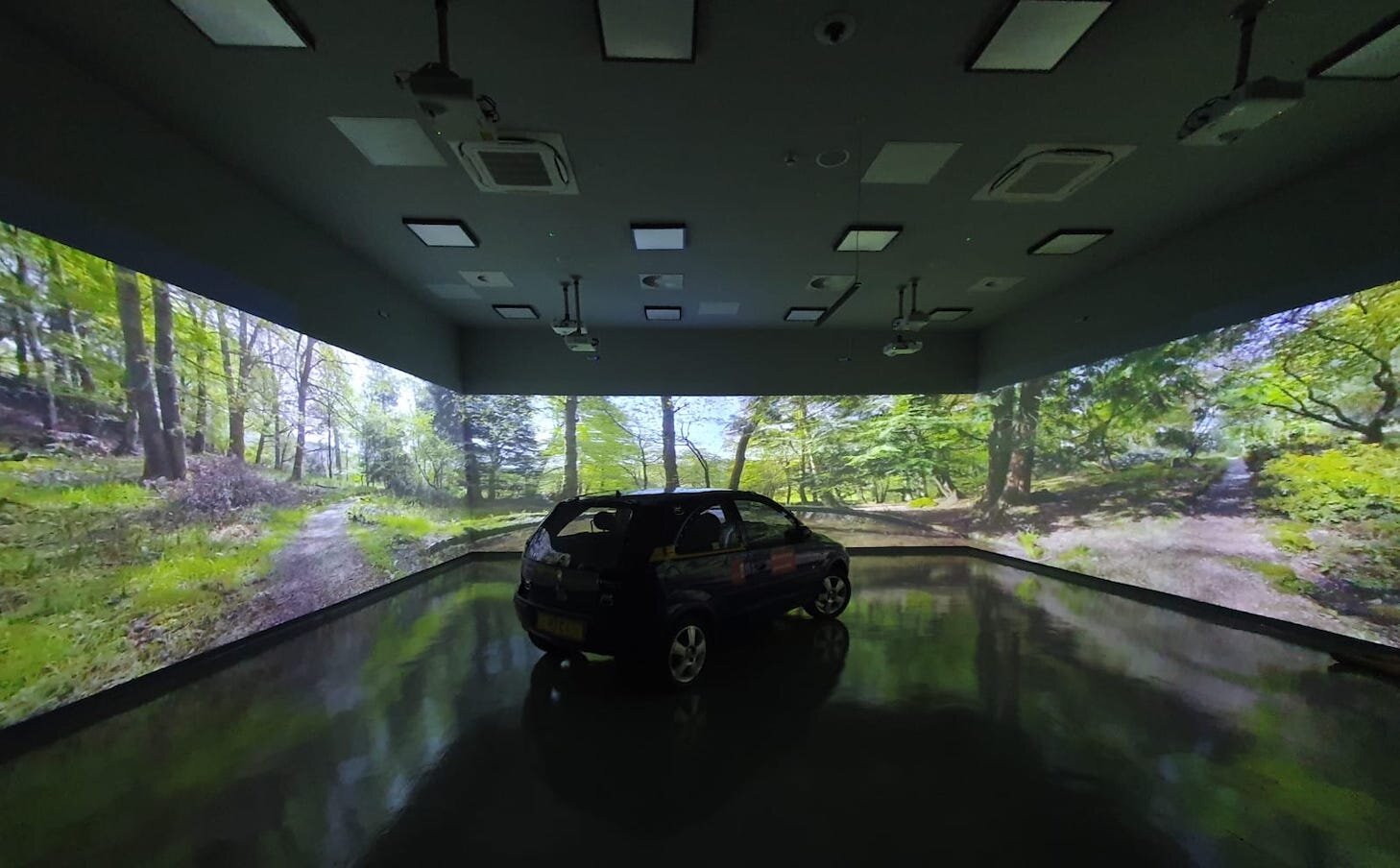
The core of it: projection plus a controllable scene
At its simplest, an immersive room uses projectors to cover one or more walls (and sometimes the floor) with content that responds to what a teacher, therapist or practitioner wants the room to be at that moment, an ocean floor, a rainforest, outer space, or a deliberately calm, low-stimulus scene. The room itself becomes the content, rather than everyone looking at a single screen on one wall.
This is genuinely different from a projector in a normal classroom. The scale and the surround, walls, sometimes floor, sometimes ceiling, is what makes it feel like a place rather than a picture.
What’s actually controlling it
Content is run from a tablet, so whoever’s leading the session can switch scenes, adjust intensity, or pause entirely, live, matched to what’s actually happening in the room rather than running on a fixed loop. A good system comes with a substantial, regularly updated content library, since the same handful of scenes get stale fast with daily use.
The optional layer: lighting, wind and scent
LED lighting, gentle wind effects and scent dispensers are the most common additions on top of the core projection and content system. Each genuinely deepens how immersive the space feels, but each is also a real add-on cost, and none of them are what make the room work. Our advice, honestly: start with a strong projection and content foundation, and treat lighting, wind and scent as things to add once the room’s proven itself, not requirements from day one.
Interactive flooring, worth it or not?
Interactive floor projection (where the floor responds to movement, footsteps trigger ripples, colour changes, or simple games) is the single biggest jump in both cost and impact. For SEN and sensory use specifically, it’s often the single most valuable addition, since movement-based interaction is a core part of many sensory and physical development goals. For a general classroom or a reminiscence space in a care setting, it’s a genuinely nice-to-have rather than essential.
FAQ
How much does an immersive room cost?
A single-wall projection setup starts from roughly £8,500 supplied and installed. A full 360° multi-wall room with interactive flooring typically starts from £22,000, and a dedicated SEN sensory room package (including lighting and effects) from around £15,000, every project is scoped individually.
Do we need a dedicated room?
No, a well-specified single wall or corner in an existing room is a genuine, lower-cost starting point. A dedicated room gives the most complete result, but isn’t a requirement to get real value from the technology.
How long a typical installation takes
A single-wall installation is usually the quickest to deliver, often within a few weeks of a survey once content and equipment are confirmed. A full multi-wall room with interactive flooring takes longer, typically a few months once structural, electrical and content work are all accounted for, so it is worth building that lead time into any planned opening date or funding deadline rather than assuming a room can be turned around at short notice.
Have a project in mind?
Tell us what you’re trying to fix and we’ll tell you honestly what’s realistic.