Outdoor LED Advertising Screens: What UK Businesses Need to Know
Outdoor LED Advertising Screens: What UK Businesses Need to Know
UK out of home advertising just had its strongest year on record, and a growing share of that spend is going on digital screens rather than static posters, which is exactly why more businesses are asking whether a building mounted LED display makes sense for them.
Out of home advertising in the UK reported its highest ever annual revenue in 2025, according to Outsmart, the industry body for the sector, and growth has continued into 2026 with revenues up a further fifteen percent in the first quarter of the year. Digital screens now account for the clear majority of that spend, which tells you something important: this is not a niche format any more, it is where a large and growing share of UK advertising budget is actually going.
What actually counts as outdoor advertising here
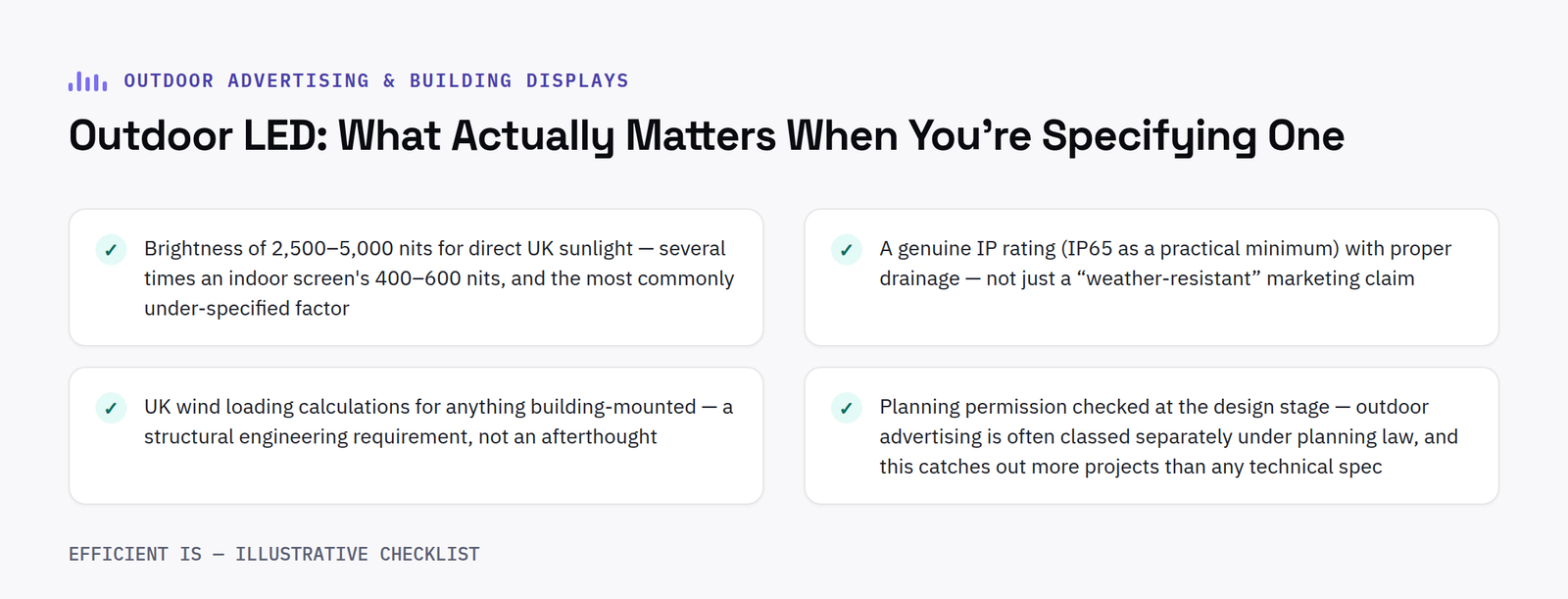
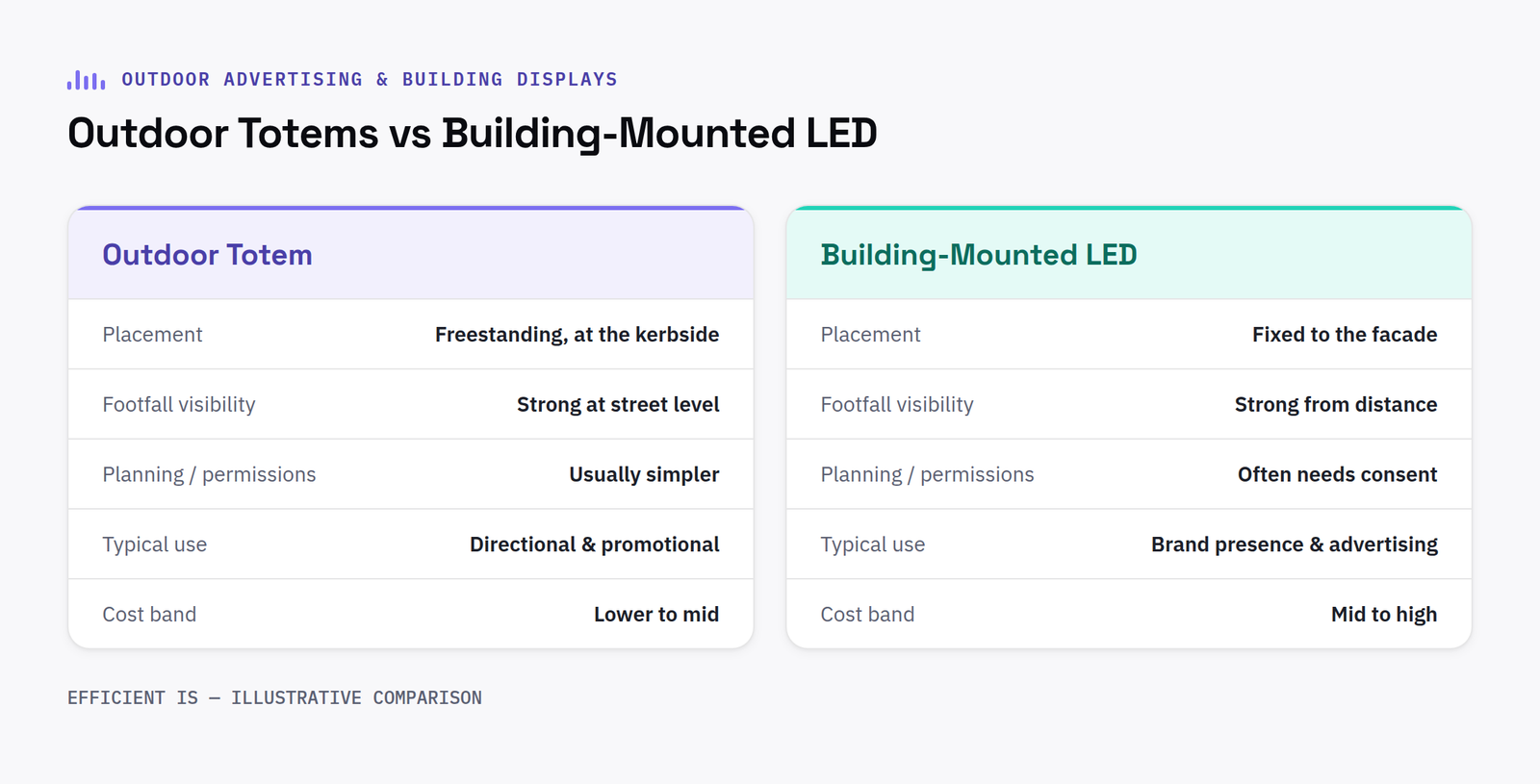
A building mounted LED screen, a freestanding digital advertising panel, and an illuminated shop fascia sign are all treated broadly the same way by UK planning rules, even though they look like quite different projects to the business installing one. The Planning Portal, the UK’s official planning guidance service, sets out when advertisement consent is needed separately from standard planning permission, and illumination is one of the specific factors a local authority will consider. In practice this means checking with your local planning authority before committing to a specific screen size or brightness, not after, since the rules genuinely vary by location and by how visible the screen will be from a public road.
The technical specification that actually matters
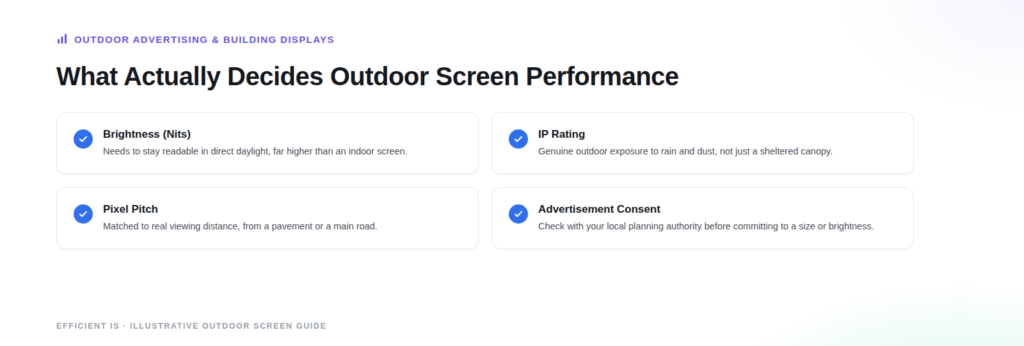
Three things decide whether an outdoor LED screen performs properly once it is installed: brightness, measured in nits, needs to be high enough to stay readable in direct daylight, which is a different requirement from an indoor screen entirely; the IP rating needs to match genuine outdoor exposure to rain and dust, not just a sheltered canopy; and pixel pitch, the spacing between individual LEDs, needs to match how far away people will actually be standing or driving when they read it, since a pitch that looks sharp from five metres away is wasted money if everyone views the screen from fifty metres on a main road.
Who actually makes this equipment
Outdoor rated LED technology is a genuinely competitive, multi vendor market rather than one dominant supplier, which matters because the right panel depends heavily on your specific brightness, viewing distance and budget rather than one default choice. Working with a brand agnostic integrator means the screen gets specified around your building and your audience, rather than around whichever single manufacturer a supplier happens to represent.
Keeping content fresh once it is installed
An outdoor screen needs the same content management thinking as any other digital signage, scheduling, remote updates and monitoring, with one addition: outdoor installations benefit from monitoring that specifically flags a brightness sensor or weatherproofing fault early, since a screen that is hard to reach physically is more expensive to fix reactively than to catch through proactive monitoring.
See our Outdoor Advertising and Building Displays page, or our Retail and Restaurant Screens page if this is for a shopfront rather than a standalone structure.
FAQ
Do we need planning permission for an outdoor LED advertising screen?
Often yes, in the form of advertisement consent rather than standard planning permission, and illumination is specifically one of the factors a local authority considers. The Planning Portal sets out the general rules, but requirements genuinely vary by location, so check with your local planning authority before committing to a screen size or brightness.
Is digital out of home advertising actually growing in the UK, or is this old news?
It is genuinely growing. Outsmart, the UK out of home advertising industry body, reported the sector’s highest ever annual revenue in 2025, with a further fifteen percent revenue growth reported for the first quarter of 2026, and digital screens account for the clear majority of that spend.
What makes an outdoor screen different from an indoor one, technically?
Three things mainly: brightness needs to be high enough to stay readable in direct daylight, the IP rating needs to genuinely withstand rain and dust rather than just a sheltered spot, and the pixel pitch needs to match real viewing distance, since a pitch that looks sharp close up is wasted money on a screen most people view from a distance.
Does it matter which manufacturer supplies the screen?
It matters less which single brand and more that the specification, brightness, IP rating and pixel pitch, is matched properly to your building and audience. This is a genuinely competitive, multi vendor market, which is exactly why a brand agnostic specification process tends to produce a better fit than defaulting to one supplier’s range.
Thinking about a building mounted display?
Tell us what you’re trying to fix and we’ll tell you honestly what’s realistic.