Not every AV estate needs the same maintenance contract. Here’s how to tell what yours actually needs.
AV maintenance contracts range from a basic phone number to full proactive monitoring, the right level depends entirely on how operationally critical the equipment actually is.
The two models, honestly compared
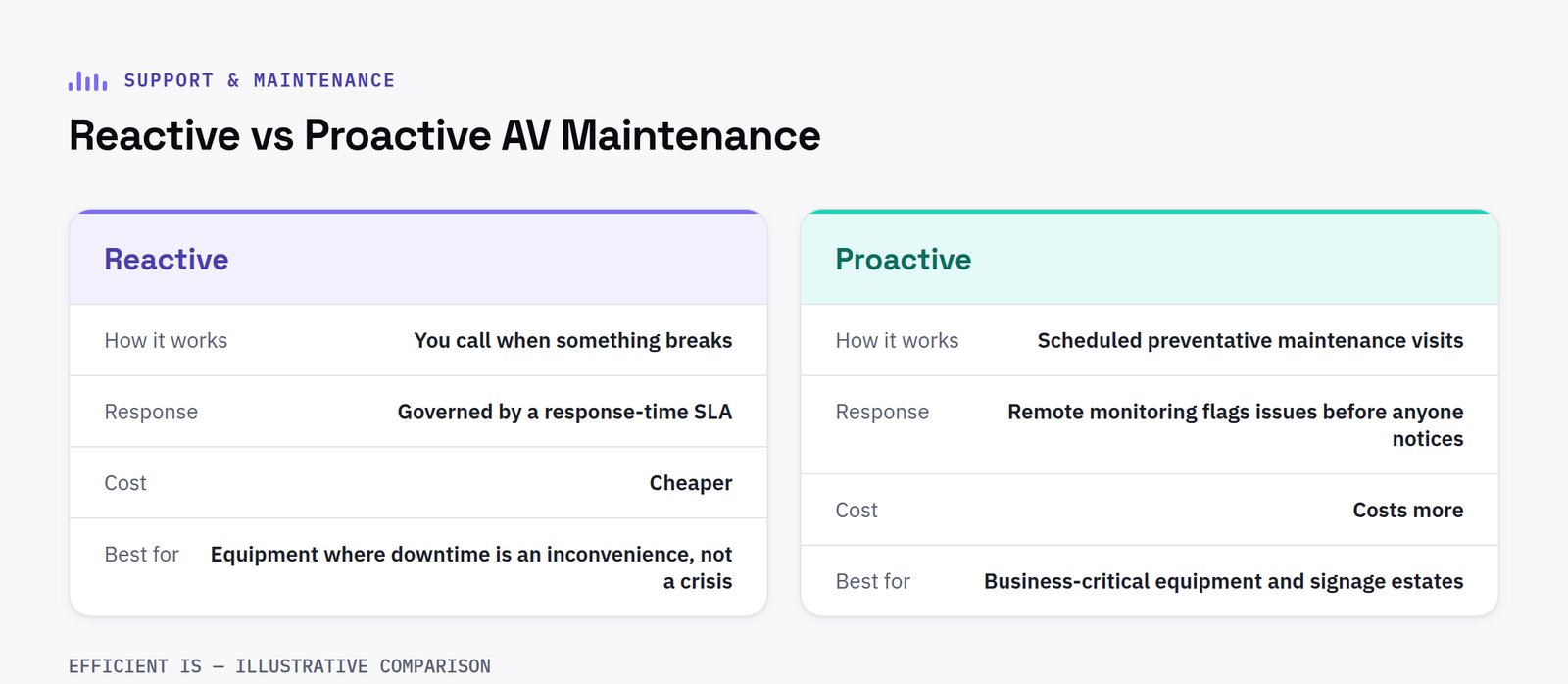
Reactive support means you call when something breaks, and a response-time SLA determines how fast someone shows up. It’s cheaper and perfectly adequate for equipment where downtime is an inconvenience, not a crisis, a meeting room screen, most classroom panels.
Proactive support adds scheduled preventative maintenance visits and, for signage networks, remote monitoring that flags a dead screen or offline player before anyone in the building notices. It costs more, and it’s worth it specifically where downtime has real consequences, a control room video wall, a council chamber ahead of a live-streamed committee meeting, a customer-facing digital menu board.
What good remote monitoring actually catches
For a signage network specifically, remote monitoring typically flags three failure modes automatically: a screen that’s gone offline, a media player that’s frozen on the same slide, and content that’s failed to update on schedule. Without it, the first person to notice any of these is usually a customer or a member of the public, not your team.
The question worth asking before you sign
Don’t buy the same maintenance tier across an entire estate by default. Ask, room by room and screen by screen: what actually happens if this goes down for a day? The answer should set the SLA, not a standard package a supplier quoted without asking.
FAQ
What’s included in an AV maintenance contract?
Typically a scheduled preventative maintenance visit, remote monitoring where applicable, and a defined response-time SLA for faults, the right mix depends on how critical the equipment is.
Is remote monitoring worth it for digital signage?
Yes, for any estate of more than a handful of screens, it catches offline screens, frozen media players and failed content updates automatically, before a customer or member of the public notices first.
How to actually read an SLA before signing
Response time is the headline figure on most maintenance contracts, but it is worth reading past it. Check whether the response time is measured from the call being logged or from an engineer actually arriving on site, whether it covers parts as well as labour, and whether there is a defined escalation path if the first response does not resolve the fault. A contract that promises a four hour response but is silent on parts availability can still leave a screen down for days waiting on a replacement panel.
Spare parts and end of life planning
Manufacturers typically commit to holding spare parts and offering support for a defined number of years after a product is discontinued, not indefinitely. Asking a supplier how long parts will realistically be available for the specific model being installed, not just the manufacturer’s general policy, is worth doing at the point of purchase rather than when something first breaks. For equipment expected to run for five years or more, building a rough end of life and replacement budget into the original business case avoids an unplanned capital request further down the line.
It is also worth asking who actually attends a maintenance visit. A named engineer who already knows the site and its equipment tends to resolve issues faster than a generic call centre dispatching whoever happens to be available that day, and continuity of that kind is easy to overlook when comparing quotes on price alone.
Have a project in mind?
Tell us what you’re trying to fix and we’ll tell you honestly what’s realistic.