Outdoor LED advertising: what actually matters when you’re specifying one
An outdoor display gets compared to an indoor one on price per screen, but the two are genuinely different engineering problems. Here’s what actually separates a display that lasts from one that doesn’t.
Brightness isn’t optional, it’s the whole point
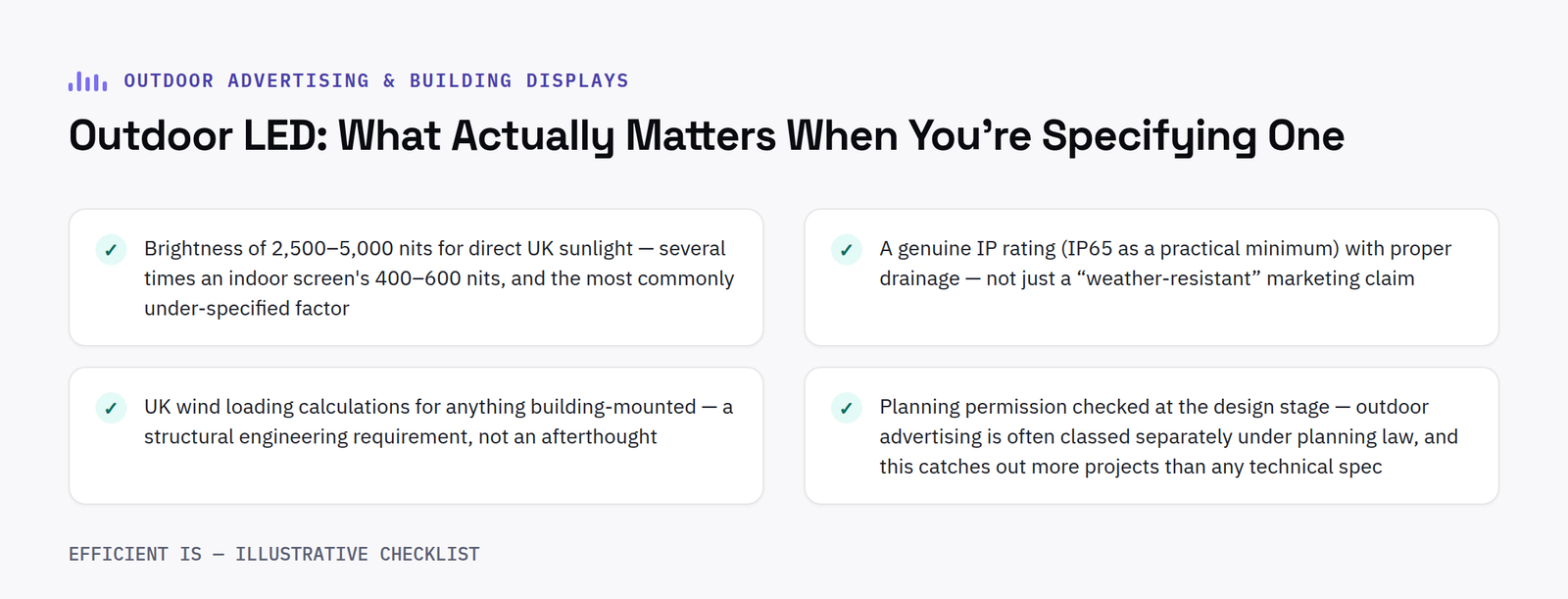
An indoor screen might run at 400 to 600 nits. An outdoor display in direct UK summer sunlight typically needs 2,500 to 5,000 nits to stay legible, under-specify this and you’ve bought an expensive screen that’s unreadable for exactly the hours it matters most. This is the single most common mistake in outdoor display specification: pricing against an indoor product’s brightness, then discovering the real number outdoors is several times higher and considerably more expensive.
Weatherproofing is a rating, not a promise
Look for a genuine IP rating (IP65 as a practical minimum for most UK outdoor installations) rather than a manufacturer’s general claim of being “weather-resistant.” Beyond the headline rating, drainage design, operating temperature range, and how the unit handles condensation over years of temperature swings all matter, a display that’s technically IP-rated but poorly drained can still fail early.
Structural loading for outdoor LED advertising is a real engineering question, not an afterthought
A building-mounted display adds wind loading to whatever it’s fixed to, and UK wind loading calculations aren’t optional extras, they’re a genuine structural engineering requirement, particularly for anything at height or on an exposed facade. This is worth involving a structural survey on early, not after a display’s already been chosen and a fixing method assumed.
Planning permission catches people out more than any technical spec
Outdoor advertising displays are very often classed as advertising under planning law, separate from general building consent, and requirements vary by local authority. Raise this at the design stage, not after a system’s been ordered; it’s a much smaller problem to solve early than late.
FAQ
How bright does an outdoor LED display need to be?
Typically 2,500 to 5,000 nits for reliable legibility in direct UK sunlight, several times brighter than a comparable indoor display, this is the most commonly under-specified factor in outdoor advertising projects.
Is planning permission always needed for outdoor advertising displays?
Often, though it varies by local authority and the specific display type, building-mounted and larger freestanding displays are more likely to need it than a smaller storefront screen. Worth checking early in the design process rather than after a system’s been specified.
Getting the brief right before asking for quotes
A clear brief before approaching suppliers saves time on both sides and produces genuinely comparable quotes. Worth confirming upfront: the realistic viewing distance and angle the display needs to be legible from, whether the site is building-mounted or freestanding, any known structural or planning constraints already identified, and roughly what budget range is realistic for the site. Suppliers quoting against a vague brief tend to each make different assumptions about brightness, IP rating and structural allowance, which makes comparing quotes on price alone genuinely misleading rather than a fair comparison.
A short site visit before final specification, rather than working from photos and a floor plan alone, is worth the extra step: it is the only reliable way to confirm actual sightlines, existing structural constraints and realistic mounting positions before committing to a specification.
Have a project in mind?
Tell us what you’re trying to fix and we’ll tell you honestly what’s realistic.