WEEE Regulations Explained: What UK Businesses Must Do With Old IT Equipment
Most businesses know they shouldn’t just bin old laptops. Fewer know exactly what the WEEE Regulations actually require, or where the real risk sits.
What WEEE covers
The Waste Electrical and Electronic Equipment Regulations govern how electrical and electronic equipment: including IT hardware, is disposed of once it reaches end of life. The regulations exist to stop e-waste going to landfill and to make sure materials are recovered and hazardous substances handled properly, rather than to make disposal difficult.
Why WEEE regulations are a business risk, not just a compliance box
Two separate risks sit inside “we need to get rid of some old laptops”: the WEEE obligation itself, and whatever data is still on the devices. A retired laptop that ends up improperly disposed of is a data breach waiting to happen if it’s still holding customer records, credentials, or commercially sensitive information, regardless of whether the WEEE side was handled correctly.
What proper disposal actually looks like
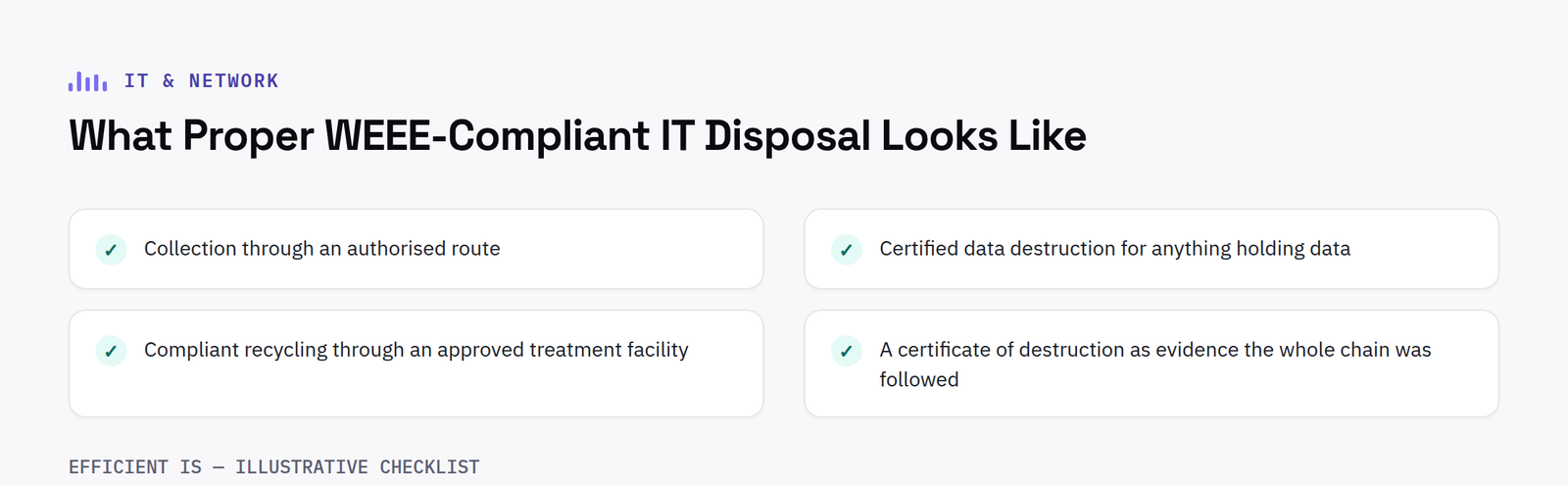
Collection through an authorised route, certified data destruction for anything holding data, compliant recycling through an approved treatment facility, and, critically, a certificate of destruction as evidence the whole chain was followed. If a disposal partner can’t provide that certificate, that’s a sign to ask more questions before handing equipment over.
When to deal with it
The easiest point to get this right is exactly when you’re refreshing hardware anyway, retired kit collected the same day new devices go out, rather than sitting in a cupboard “to deal with later,” which is where most disposal risk actually accumulates.
What businesses actually get wrong
The most common mistake is not disposing of equipment badly, it is not tracking it at all. Old laptops, monitors and networking equipment often sit in a cupboard or store room for months or years after they are taken out of active use, with nobody responsible for their eventual disposal and no record of what data they still hold. By the time someone finally deals with them, whoever originally used the device may have left the business, and nobody is quite sure what was on it. This is where the real risk sits: not in the WEEE compliance question itself, but in the gap between a device going out of use and it actually being disposed of properly.
A simple fix is to treat disposal as part of the same process as procurement rather than a separate, occasional task. Whenever new hardware goes out, whatever it is replacing comes back the same day, gets logged, and enters a defined disposal process immediately, rather than being left for someone to deal with later. This closes the gap where devices sit unaccounted for, and it means the certificate of destruction and disposal records are generated as a matter of course, not chased up months after the fact when a customer or auditor asks for evidence.
For businesses handling personal data specifically, this record keeping matters beyond good practice: being able to show exactly when a device was disposed of, and how, is part of demonstrating compliance with data protection obligations if a question is ever raised about where old customer or employee data ended up.
It is also worth checking who is actually responsible for a disposal partner’s downstream chain, not just the collection itself. A certificate of destruction is only meaningful if the organisation issuing it can show where equipment actually went after collection, rather than passing that question on to a third party nobody has vetted directly.
Planning a hardware refresh?
Get the old kit dealt with properly, in the same visit, with a certificate to show for it.